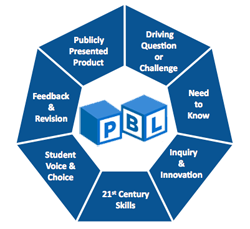
Project Based Learning at KV Kanjikode under KVS RO Ernakulam
Showing posts with label Class VIII A. Show all posts

Science Class VIII A: Lesson 5 The Do Phase
Ammu Chungath Class VIII Class VIII A Science Class VIII
(5.1) Project Launch:
Describe how the project will be launched, including how goals, expectation, rules, procedures, assessment, and grading will be presented to the students.
The project was launched by general discussion about water pollution in the class by teacher. The goal of the project is to make students sensitized to the problems of society and to make them active participants to find solutions. Students are expected to work in group under leader for the tasks given.
The project proceeds as per the procedure given below.
• Formation of groups.
• Collecting water samples for testing the purity.
• Finding sources of water at their home.
• Finding causes of water pollution
• Finding effect of water pollution
• Teacher talk on ‘effects of pollutants on human’
• Finding methods to control water pollution.
• Presenting with PPT
• Submission of report.
(5.2) Artifacts:
List artifacts that will be created during the project
Chart/Posters
Report
PPT
(5.3) Culminating product:
Describe what culminating product or products are expected to be created during the project and how they will be presented.
Charts and PPTs will be used for conduction of seminars.
Report will be submitted on the completion of project.
(5.4) Celebrating completion:
Describe how the students will celebrate when the project is completed.
Giving certificates.
Describe how the project will be launched, including how goals, expectation, rules, procedures, assessment, and grading will be presented to the students.
The project was launched by general discussion about water pollution in the class by teacher. The goal of the project is to make students sensitized to the problems of society and to make them active participants to find solutions. Students are expected to work in group under leader for the tasks given.
The project proceeds as per the procedure given below.
• Formation of groups.
• Collecting water samples for testing the purity.
• Finding sources of water at their home.
• Finding causes of water pollution
• Finding effect of water pollution
• Teacher talk on ‘effects of pollutants on human’
• Finding methods to control water pollution.
• Presenting with PPT
• Submission of report.
(5.2) Artifacts:
List artifacts that will be created during the project
Chart/Posters
Report
PPT
(5.3) Culminating product:
Describe what culminating product or products are expected to be created during the project and how they will be presented.
Charts and PPTs will be used for conduction of seminars.
Report will be submitted on the completion of project.
(5.4) Celebrating completion:
Describe how the students will celebrate when the project is completed.
Giving certificates.

Science Class VIII A:Lesson 7 The Manage Phase
Ammu Chungath Class VIII Class VIII A Science Class VIII
(7.1) Process Management:
List tasks that will be used to manage the process of conducting the learning
Discussion between team members, peer talk, teacher talk, expert talk, conduction of water sample testing, finding causes, effects and control measures of water pollution.
(7.2) Student Preparation:
Describe how students will be prepared for the project prior to launch. List any specific instruction or tasks that will be needed
By asking relevant questions like
Do you think the water you drink is pure? What are the sources of water to your home? Are you satisfied about the purity of that water?
(7.3) Facilitation:
Describe how facilitation of resources will be used to enable the students to be successful.
The progress of students will be continuously monitored and required changes are made. Proper idea is given by the teacher what to research during the course of project. Students are made free to ask any relevant doubts regarding the project.
(7.4) Progress Monitoring:
Describe how program will be monitored throughout the project.
By group presentations and discussion between team leaders and teacher.
Group Progress
By questioning the students from time to time and final presentation.
Individual Progress
(7.5) Re-planning:
Describe how ‘re-planning’ will be used if the project goes off track
Group leaders will be called and discuss the need and relevance of re-planning if required. This ensures that the project goes in the right track and will be completed at the right time.
(7.6) Conflict Management:
Describe how to address problems related to participation, offer approaches to manage other conflicts that may arise.
All students are motivated to participate effectively in the ongoing project. They have the freedom to perform tasks as per their ability in the group.
List tasks that will be used to manage the process of conducting the learning
Discussion between team members, peer talk, teacher talk, expert talk, conduction of water sample testing, finding causes, effects and control measures of water pollution.
(7.2) Student Preparation:
Describe how students will be prepared for the project prior to launch. List any specific instruction or tasks that will be needed
By asking relevant questions like
Do you think the water you drink is pure? What are the sources of water to your home? Are you satisfied about the purity of that water?
(7.3) Facilitation:
Describe how facilitation of resources will be used to enable the students to be successful.
The progress of students will be continuously monitored and required changes are made. Proper idea is given by the teacher what to research during the course of project. Students are made free to ask any relevant doubts regarding the project.
(7.4) Progress Monitoring:
Describe how program will be monitored throughout the project.
By group presentations and discussion between team leaders and teacher.
Group Progress
By questioning the students from time to time and final presentation.
Individual Progress
(7.5) Re-planning:
Describe how ‘re-planning’ will be used if the project goes off track
Group leaders will be called and discuss the need and relevance of re-planning if required. This ensures that the project goes in the right track and will be completed at the right time.
(7.6) Conflict Management:
Describe how to address problems related to participation, offer approaches to manage other conflicts that may arise.
All students are motivated to participate effectively in the ongoing project. They have the freedom to perform tasks as per their ability in the group.

Science Class VIII A: Lesson 6 The Review Phase
Ammu Chungath Class VIII Class VIII A Science Class VIII
(6.1)Student
Reflection and Evaluation:
Describe how student reflection
and evaluation will be conducted.
|
Each team
is given time for presentation and will be graded accordingly.
|
(6.2)
Teacher Reflection and Evaluation:
Describe how teacher reflection
and evaluation will be conducted.
|
Value
points are given teacher from time to time and once the project is finalized,
report is submitted to the Principal for evaluation.
|
(6.3)
Assessment of 21st Century skills:
List of 21st century
skills in this project and its assessment
|
Collaboration,
communication, cognitive thinking
|
(6.4)
Summative Assessment and Grading:
List products and the
corresponding rubrics that will be used for SA and Grading
|
Product
|
Rubric
|
Grading
|
|
Student
presentation
Report
PPT
|
Quality
and clarity of expression
Accuracy
and presentation
Originality
|
Will be
graded in 10 point scale
|

Science Class VIII A: WORK PLAN
Ammu Chungath Class VIII A Science Class VIII|
Sl.
No
|
TASK
|
SUBTASK
|
ROLE
|
START DATE
|
END DATE
|
PRODUCT
|
|
01
|
Launch project
|
|
|
10.08.16
|
10.09.16
|
Project launched
|
|
02
|
Deliver
classroom instruction
|
Areas to be
covered.
.1.Define the
project
2.Culminating
products
|
Teacher
|
11.08.16
|
12.08.16
|
Initial
classroom instruction is completed
|
|
03
|
Group selection
|
Students’ list
|
Teacher
|
12.08.16
|
12.08.16
|
Group selection
is completed
|
|
04
|
Conduct research
|
Collection of
Content on 1.sources of water pollution
2.effects of
water pollution
|
Student
|
13.08.16
|
18.08.16
|
Students submitted
report.
|
|
05
|
Collected water
samples for testing
|
A member from
each team is assigned responsibility.
|
Student
|
13.08.16
|
13.08.16
|
pH of water
sample tested.
|
|
06
|
Programme sheet
activity
|
Prepared based
on curricular units and problem areas
in daily life affecting health
|
Student and
teacher
|
16.08.16
|
16.08.16
|
Report
submitted.
|
|
07
|
Advice meeting
|
Team prepare
briefs
|
All team members
|
20.08.16
|
|
|
|
08
|
Programme sheet
presentation
|
Presentation
|
,,
|
21.08.16
|
|
|
|
09
|
Preperation of
questionnaire
|
Eliciting from
peer group and self analisation
|
Each member
|
21.08.16
|
|
|
|
10
|
Expert talk
|
Mrs. P. Suchitra
TGT BIO
|
Teacher
|
22.08.16
|
|
|
|
11
|
Exhibition
|
Practice
presentation by students
|
All members
|
06.09.16
|
|
|
|
12
|
Project
presentation
|
Posting in the
computer/blog
|
All
|
06.09.16
|
|
|
|
10
|
Assessment and
grading
|
Prepare rubrics
and assessment
|
Teacher
|
10.09.16
|
|
|
|
11
|
Refection and
evaluation
|
Student
reflection and evaluation, Teacher refection and evaluation
|
Students and
teacher
|
10.09.16
|
|
|
|
12
|
Project closed
|
Submitting to the
Principal
|
Teacher
|
11.09.16
|
|
|

Science Class VIII A: Lesson 3 Plan Phase
Ammu Chungath Class VIII Class VIII A Science Class VIII
3.1 Work Breakdown, Products and Milestones:
List the project task and, if possible at this stage include the sub-tasks. For each task add the product that will be created and indicate it will be a milestone.
Note: Products are shown in ( )’s. Milestones are in bold font.
Classroom instruction: 1. The concept of water pollution is explained. 2. Grouping of students. (student groups)
Research: online and library (research report)
Class activity: Testing purity of water sample from identified localities. (pH test) (test report)
Survey: sources of water pollution (survey report)
Survey: effects of water pollution (survey report)
Activity: collection of newspaper cuttings on water pollution (poster)
Activity: creating awareness on water pollution by notice distribution(notice)
Activity: Expert talk on water conservation (expert talk)
Presentation: Group wise presentation using PPT (Report , PPT)
Celebration: a “mini exhibition” of posters and reports in class. (exhibition)
3.2 Role definition:
List the roles team members will fulfill in the project.
Project leader: teacher will fulfill this role
Researcher : team leaders
Survey writer : group leaders
Surveyors : all members in a group
Team pollution expert: will present the team’s advice to the class for water conservation
Presentation author : group leader
Presenter (all students will take some part in the presentation)
3.3 Task schedule:
Note start and end dates for the project.
Include expected dates to start specific tasks
Project start date 10th August 2016
Project end date 10th September 2016
3.4 Special Activities Plan:
List any special activities (e.g. Field trips or guest speakers) including dates.
Expert talk on concerns of water pollution : 19 August 2016
Mini exhibition : 10 September 2016
3.5 Resource Plan:
List resource that will be required during the project and any other date constraints associated with them.
Computer lab: Date and period in the Time Table.
3.6 Direct Instruction:
List any planned direct instruction sessions and link them to specific tasks if appropriate.
Basics of water pollution – causes, effects and control measures
How to test purity of water sample?
How to conduct survey on sources and effects of water pollution?
3.7 Reviews and checkpoints:
Describe how you will incorporate review meetings and checkpoints in the project
At the end of every week there will be a 20 minutes class conference to discuss progress, successes and challenges.
A checkpoint meeting for each team will be held for 10 minutes twice per week.
3.8 Assessment plan:
Describe the balanced assessment plan for the project. List products that will be assessed during the project. List rubrics that need to be created before project launch.
Opportunities for authentic assessment will include: the surveys and results, testing water sample, presenting the findings in the form of PPT.
Formative assessment will primarily focus on the artifacts created by the students during the project. Special attention will be paid to survey prototypes, learning journals and presentation outlines.
Summative assessments will be performed on the survey results, presentations on the causes and effect of water pollution and the portfolios of work.
Rubrics prepared: Survey questions and results rubric, report submission rubric, PPT presentation rubric, grading rubric.
List the project task and, if possible at this stage include the sub-tasks. For each task add the product that will be created and indicate it will be a milestone.
Note: Products are shown in ( )’s. Milestones are in bold font.
Classroom instruction: 1. The concept of water pollution is explained. 2. Grouping of students. (student groups)
Research: online and library (research report)
Class activity: Testing purity of water sample from identified localities. (pH test) (test report)
Survey: sources of water pollution (survey report)
Survey: effects of water pollution (survey report)
Activity: collection of newspaper cuttings on water pollution (poster)
Activity: creating awareness on water pollution by notice distribution(notice)
Activity: Expert talk on water conservation (expert talk)
Presentation: Group wise presentation using PPT (Report , PPT)
Celebration: a “mini exhibition” of posters and reports in class. (exhibition)
3.2 Role definition:
List the roles team members will fulfill in the project.
Project leader: teacher will fulfill this role
Researcher : team leaders
Survey writer : group leaders
Surveyors : all members in a group
Team pollution expert: will present the team’s advice to the class for water conservation
Presentation author : group leader
Presenter (all students will take some part in the presentation)
3.3 Task schedule:
Note start and end dates for the project.
Include expected dates to start specific tasks
Project start date 10th August 2016
Project end date 10th September 2016
3.4 Special Activities Plan:
List any special activities (e.g. Field trips or guest speakers) including dates.
Expert talk on concerns of water pollution : 19 August 2016
Mini exhibition : 10 September 2016
3.5 Resource Plan:
List resource that will be required during the project and any other date constraints associated with them.
Computer lab: Date and period in the Time Table.
3.6 Direct Instruction:
List any planned direct instruction sessions and link them to specific tasks if appropriate.
Basics of water pollution – causes, effects and control measures
How to test purity of water sample?
How to conduct survey on sources and effects of water pollution?
3.7 Reviews and checkpoints:
Describe how you will incorporate review meetings and checkpoints in the project
At the end of every week there will be a 20 minutes class conference to discuss progress, successes and challenges.
A checkpoint meeting for each team will be held for 10 minutes twice per week.
3.8 Assessment plan:
Describe the balanced assessment plan for the project. List products that will be assessed during the project. List rubrics that need to be created before project launch.
Opportunities for authentic assessment will include: the surveys and results, testing water sample, presenting the findings in the form of PPT.
Formative assessment will primarily focus on the artifacts created by the students during the project. Special attention will be paid to survey prototypes, learning journals and presentation outlines.
Summative assessments will be performed on the survey results, presentations on the causes and effect of water pollution and the portfolios of work.
Rubrics prepared: Survey questions and results rubric, report submission rubric, PPT presentation rubric, grading rubric.
Subscribe to:
Posts (Atom)


